
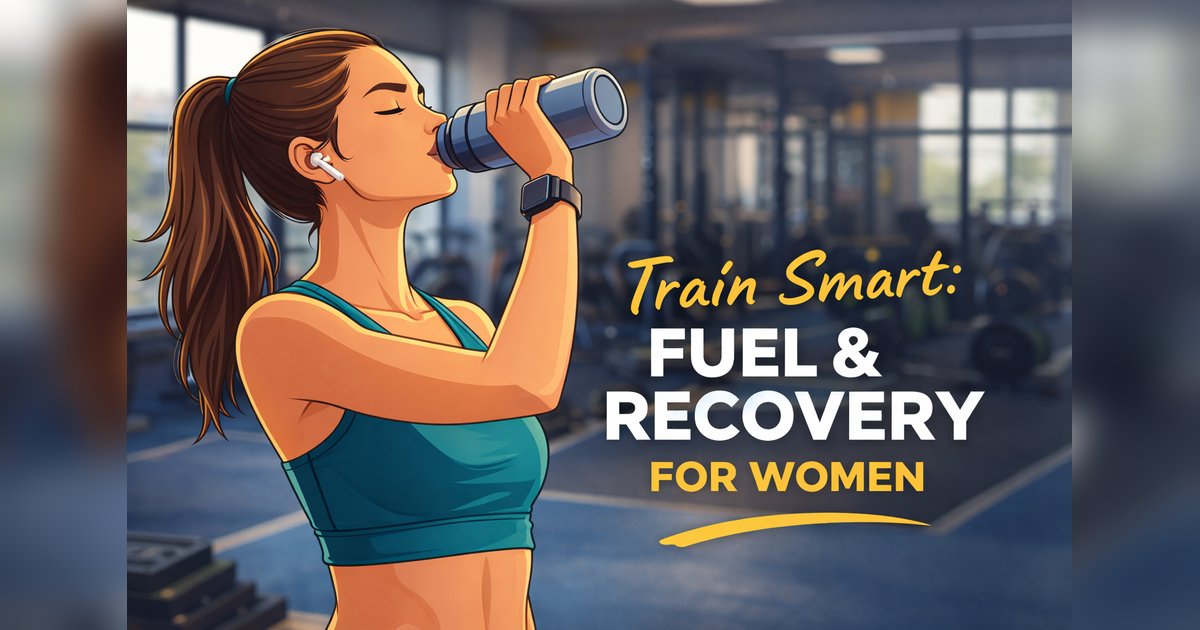
Women Overtraining, Fuelling, Recovery & Avoiding Burnout
A practical guide to protecting health while improving performance
Training can be a brilliant tool for strength, confidence and wellbeing — but if exercise demands aren’t matched with enough fuel, rest and recovery, the body can start to struggle. In women, this may show up as low energy, poor sleep, frequent illness, injuries, or changes to the menstrual cycle.
When training exceeds fuelling and recovery
RED-S (Relative Energy Deficiency in Sport)
RED-S can occur when energy intake isn’t enough to cover both training and the body’s essential functions. It may affect menstrual function, hormones, immunity, bone health, mood and performance. (1)
Common red flags include:
- Period changes (irregular, missed, or noticeably lighter)
- Persistent fatigue, low mood, or reduced performance
- Repeated injuries (especially stress fractures) or frequent illness
Bone health matters
Low energy availability and hormonal disruption (including lower oestrogen) can reduce bone mineral density over time, increasing stress fracture risk now and potentially osteoporosis risk later. Adequate energy intake and nutrients such as calcium and vitamin D support long-term resilience. (1)
Overtraining and total stress load
Overtraining syndrome can develop when training stress continues without enough recovery. Key signs include fatigue, sleep disruption, mood changes and performance dips. It’s also worth remembering that the body doesn’t separate “training stress” from “life stress” — work pressure, poor sleep and under-eating can add to the load.
How to support performance (without burning out)
1) Eat enough overall
The foundation is enough energy to match your training demands. If you’re under-fuelling, performance and recovery can suffer even if food choices are “healthy.” (1)
2) Balance the basics: carbs, protein and fats
- Carbohydrates support training quality and help restore muscle glycogen (e.g., oats, rice, potatoes, fruit). (5)
- Protein supports repair and adaptation. A commonly cited range for athletes is around 1.3–2.0 g/kg/day, depending on training intensity and goals. (2)
- Fats support hormones, immunity and overall health — very low-fat approaches can be unhelpful for many active women. (1)
Menstrual cycle note: Some women experience GI symptoms around menstruation, which can affect food tolerance. If heavier meals feel difficult at certain times, lighter options (e.g., eggs, yogurt, smoothies) may be more practical. (3)
3) Time your fuel (simple version)
- Pre-training: a small carb-based snack/meal can support session quality.
- Post-training: aim for carbs + protein to support the “4Rs” of recovery: rehydrate, refuel, repair, rest. (4)
4) Hydration & electrolytes
For shorter sessions, water is usually enough. For longer or hotter sessions, you may benefit from fluids containing electrolytes and carbohydrates. Hydration needs vary by sweat rate, intensity and conditions. (5)
Over-drinking plain water during prolonged exercise without replacing sodium can increase the risk of exercise-associated hyponatremia, so “more” isn’t always better. (6)
5) Supplements: food first
Supplements can help in specific situations, but they don’t replace a balanced diet. If you compete in sport, choose products that are third-party tested (e.g., Informed-Sport style testing) to reduce contamination risk. (1)
Key takeaway
Strong performance is built from training + fuelling + recovery. If you’re noticing persistent fatigue, repeated injuries, frequent illness, or menstrual cycle changes, it’s worth taking it seriously and seeking support early.
References
- Mountjoy M, Sundgot-Borgen JK, Burke LM, Ackerman KE, Blauwet C, Constantini N, et al. IOC consensus statement on relative energy deficiency in sport (RED-S): British Journal of Sports Medicine. 2018 update. Available from: https://bjsm.bmj.com/content/52/11/687 (Accessed 15 September 2025)
- Phillips SM, Van Loon LJC. Dietary Protein for Athletes: From Requirements to Optimum Adaptation. Journal of Sports Sciences. 2011. Available from: https://pubmed.ncbi.nlm.nih.gov/22150425/ (Accessed 17 September 2025)
- Bernstein MT, Graff LA, Avery L, Palatnick C, Parnerowski K, Targownik LE. Gastrointestinal symptoms before and during menses in healthy women. BMC Women’s Health. 2014. Available from: https://www.ncbi.nlm.nih.gov/pmc/articles/PMC3901893/ (Accessed 17 September 2025)
- Bonilla DA, Perez-Idarraga A, Odriozola-Martinez A, et al. The 4R’s Framework of Nutritional Strategies of Post-Exercise Recovery: A Review with Emphasis on New Generation of Carbohydrates. 2024. Available from: https://pmc.ncbi.nlm.nih.gov/articles/PMC7796021/ (Accessed 17 September 2025)
- Sawka MN, Burke LM, Eichner ER, Maughan RJ, Montain SJ, Stachenfeld NS. American College of Sports Medicine Position Stand: Exercise and Fluid Replacement. Medicine & Science in Sports & Exercise. 2007. Available from: https://pubmed.ncbi.nlm.nih.gov/17277604/ (Accessed 17 September 2025)
- Buck E, Miles R, Schroeder JD. Exercise-Associated Hyponatremia. StatPearls. 2022. Available from: https://www.ncbi.nlm.nih.gov/books/NBK572128/ (Accessed 18 September 2025)
Disclaimer: This blog is for general educational purposes only and is not intended to replace medical advice, diagnosis, or treatment. If you have a medical condition, have a history of disordered eating, are experiencing menstrual changes, repeated injuries, dizziness/fainting, or are concerned about your physical or mental health, please speak with a qualified healthcare professional before making changes to training, diet, hydration, or supplements.